How Spotify’s Greasy Tunes Pop-Up is Rewiring Nairobi’s Music Consumption
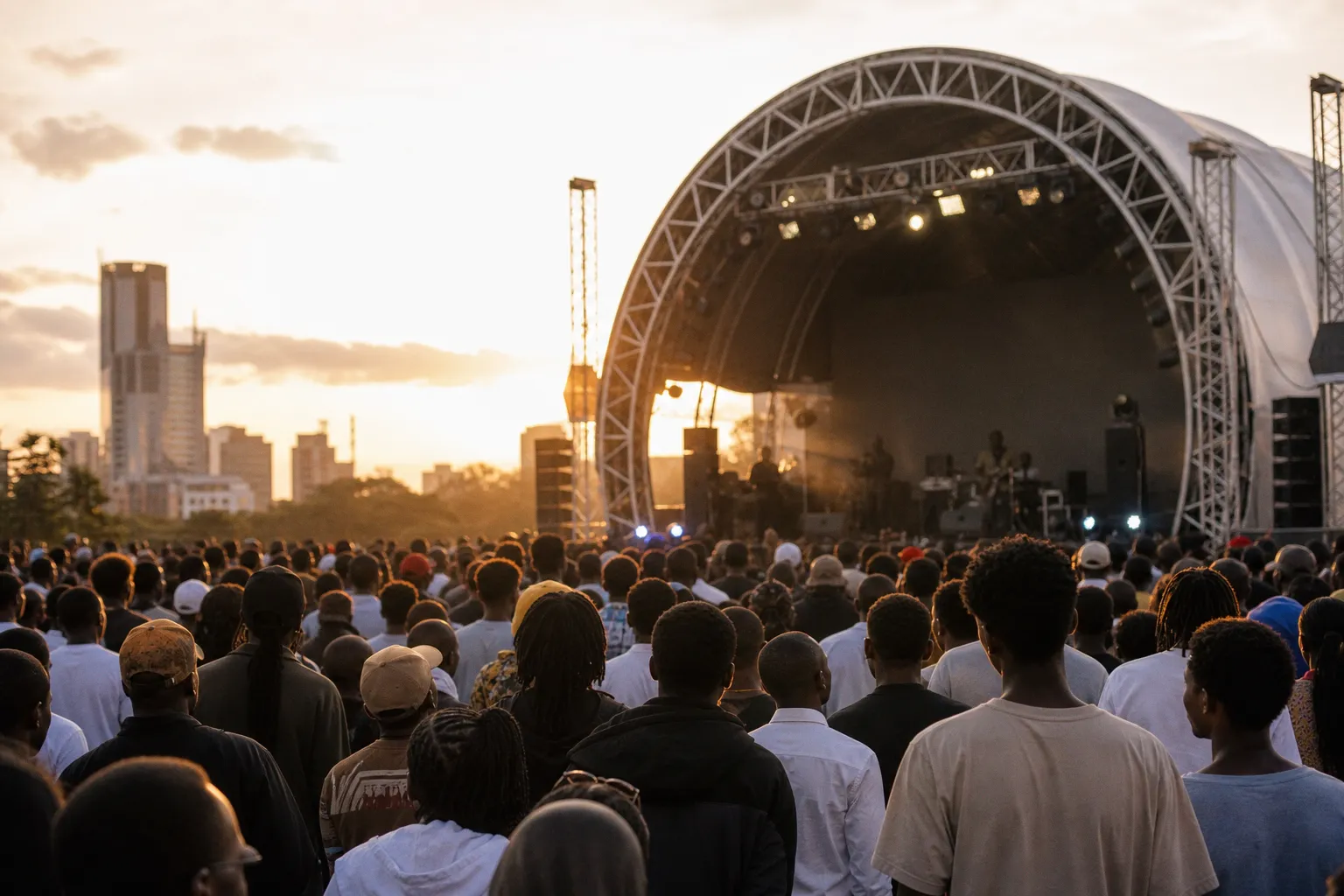
Spotify didn't just plant a flag in Nairobi this month — they built a 12-day fortress at Heltz House in Ngara and called it "Greasy Tunes," and the data drop behind the activation is the most telling industry tell of 2026.
Darius Rollins, Chief Hip-Hop Critic & Culture Editor·updated July 20, 2026
According to proprietary listening figures released by the platform in June, the 18-to-24 crowd now drives 53.7% of all Spotify streams in the Kenyan capital — a full nine points ahead of Lagos and nearly double Johannesburg's 29.9%. That's not a trend. That's a market relocation.
The Drill Footprint in the Algorithm
Here's what matters for the culture: Spotify isn't chasing Nairobi for Afropop alone. The "Made In Kenya" playlist — the connective tissue of the entire pop-up — has Buruklyn Boyz as daily cover artists, and the platform handed the collective's sound a runway showcase at "Karibu Night." Studio 18 reworked official Greasy Tunes merch into high-fashion garments while Buruklyn delivered a headline set, collapsing the distance between playlist algorithm and physical streetwear economy in one evening. Peak streaming hours in Nairobi land between 6 and 9 p.m., accounting for 20.9% of daily activity in the 18-to-24 bracket — which explains why every Greasy Tunes event skewed evening-heavy. The platform isn't guessing. They're scheduling around the city's listening pulse.
Afropop posted a 21% year-on-year jump among Gen Z, but the sleeper numbers are buried in the secondary genres. Drill grew just 6% — six times slower than gospel, which climbed 37%. Dancehall exploded at 95% growth, bongo flava at 75%, gengetone at 48%. The takeaway: Kenyan Gen Z isn't picking sides. They're stacking playlists like producers stack samples, and the algorithm is finally rewarding the omnivorous listener instead of punishing them.
The Streaming War's New Front
Spotify's East Africa move follows Johannesburg in 2023 and Lagos in 2025 — but the corporate positioning has shifted. Agnes Opondo, the platform's Artist and Label Partnerships Manager for East Africa, framed it bluntly: "We talk about the South and West every time, but East Africa is next." That sentence is the real headline. Billboard budgets are out. Immersive, locally-coded pop-ups with food vendors (Jikoni Studio Nairobi), nightlife curators (The BAG), and fashion collectives are in — because once every platform has the same catalog and the same recommendation engine, the only differentiator left is cultural embedding.
Kenya already sits as Spotify's third-largest Sub-Saharan market behind Nigeria and South Africa. But on Gen Z penetration, Nairobi is number one on the continent. For drill artists, Afrofusion producers, and the wider East African scene, that means one thing: the streaming infrastructure is being built around you in real time. The question isn't whether the platforms show up. It's whether the artists negotiate from a position of leverage while the spotlight's hot — or sign whatever's in front of them and read about the boom later.