I checked Drake diss track samples to avoid copyright strikes
April 2024. Drake drops "Taylor Made Freestyle" on a Friday night, leans entirely on AI-generated vocals mimicking Tupac Shakur to fire at Kendrick Lamar. Forty-eight hours later, the track vanishes from his socials. Not because of Kendrick.
Darius Rollins, Chief Hip-Hop Critic & Culture Editor·Updated: July 06, 2026·10 min read
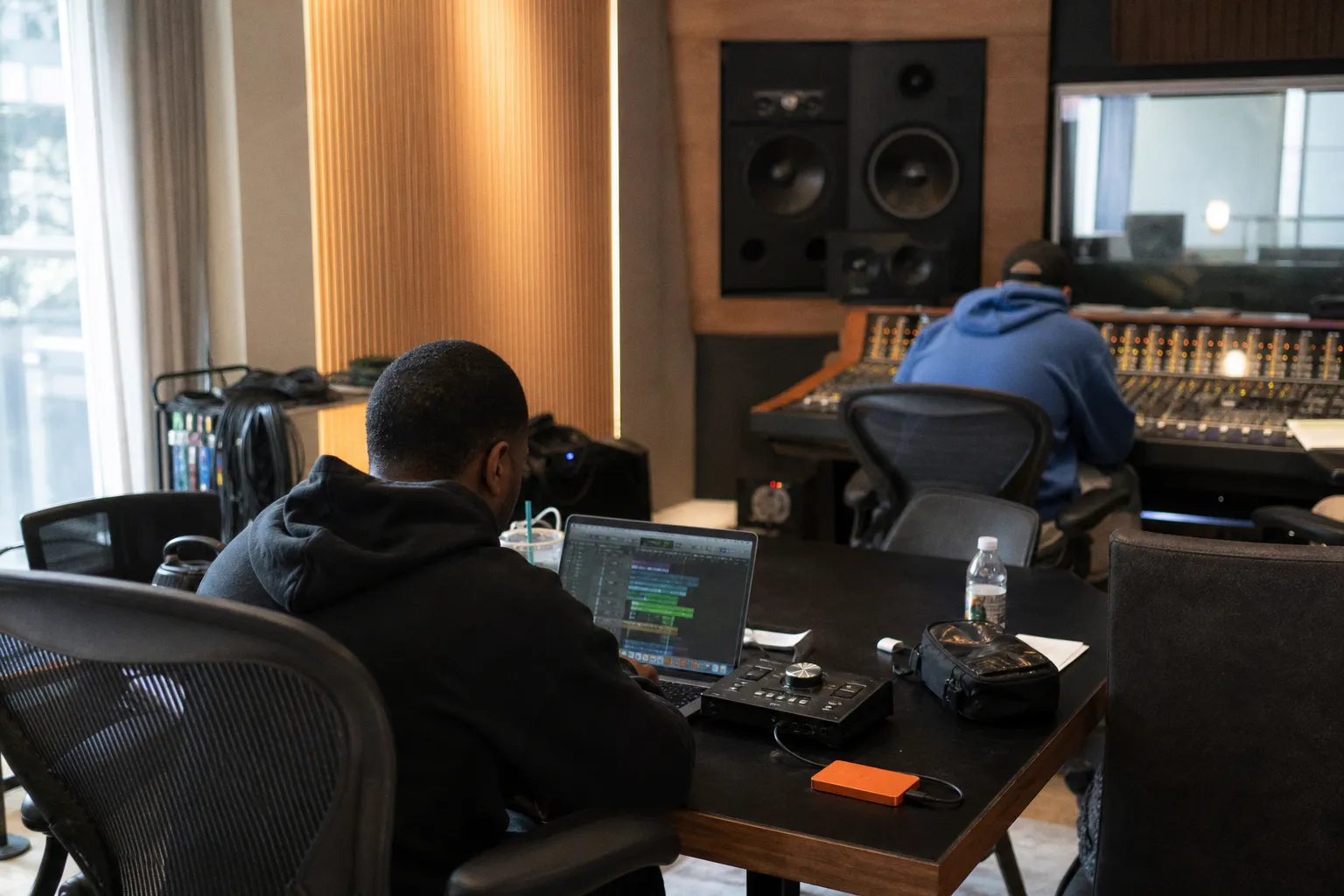
I've spent the last week pulling the actual legal scaffolding apart — sample law, Right of Publicity statutes, statutory damages ranges — because the discourse around new Drake diss track drops keeps treating copyright like a vibes-based debate. It's not. It's a two-tier clearance trap with seven-figure liability attached, and the "Taylor Made" takedown is the cleanest case study hip-hop culture and news cycles have produced in a decade.
The Legal Anatomy of a Rap Beef: Why Diss Tracks Aren't Exempt
Let me kill the romantic notion right now. A rap feud is not a legal safe harbor. There's no clause in U.S. copyright statute that says, "If the track is a diss, the sample is fair game." That myth has cost artists seven figures and counting, and it survives because the culture treats beef as performance art rather than a commercial release.
The moment a diss track hits streaming platforms — Spotify, Apple Music, Tidal, even a SoundCloud link with monetized ads — it becomes a commercial product. The U.S. Copyright Office doesn't care that the bars are personal. They care about two things: was original copyrighted material used, and was it licensed? If the answer to the first is yes and the second is no, you've got infringement. Period.
Drake operates at the top of the industry, which means his team has the legal infrastructure most artists dream of. Yet "Taylor Made Freestyle" still got pulled inside 48 hours. That tells you everything about how the estate of a deceased artist — Tupac's people in this case — can move with speed when Right of Publicity is invoked. AI voice cloning isn't a stylistic flex in the eyes of the law; it's a separate, additive violation on top of any underlying sample claims.
A diss track isn't a tweet. It's a commercial release, and commercial releases require both licenses — every time, no exceptions for bad blood.
The Taylor Made Freestyle Precedent: AI and Right of Publicity
Here's where the game genuinely shifted. Before April 2024, the sample-and-clearance conversation in hip-hop centered on interpolations, replayed melodies, and uncleared loops. "Taylor Made" dragged us into Right of Publicity territory — the right to control how your name, image, and voice get used commercially. That legal arena sits outside copyright in a meaningful way. You can have a fully cleared musical sample and still lose a publicity lawsuit if you clone someone's voice without authorization.
The Tupac estate's cease-and-desist didn't argue about a chord progression or a drum break. They argued that Drake's team manufactured AI vocals to sound like a dead man and released them commercially without permission. Different statute, different damages structure, different playbook entirely. Right of Publicity laws vary state by state — California, New York, Tennessee, Georgia all protect deceased artists in different windows and through different mechanisms — and they aren't fully preempted by federal copyright law. So even if you somehow convinced a court the underlying musical sample was fair use, the publicity claim keeps moving.
This is the part of the conversation most hip-hop commentary still skips. When the beef discourse treats AI diss tracks as a clever new weapon, it ignores that the legal exposure doubles the moment you synthesize a voice. We've moved from "did you clear the sample" to "did you clear the likeness, the persona, and the synthetic performance." That's not a tweak. That's a new front in the copyright war.
The risk of running on assumption here is real. When any beef drops and the internet immediately claims "the sample was cleared" or "AI voice is legal now," that kind of rumor travels faster than the actual court record. The same disciplined approach to fact-checking contested claims — the kind of rigorous news verification you see applied to volatile stories in resources like this fact-checking breakdown of contested news claims — is the rigor you want before repeating any "it's all cleared" line that surfaces during a feud.
Master Recordings vs. Publishing: The Two-Tiered Clearance Trap
This is the trap that swallows indie artists and surprises even some veterans. Clearing a sample isn't one transaction. It's two, and they don't run through the same office.
The first license is for the master recording — the actual sound recording of the song you're lifting from. That license lives with the label or whoever owns the master. In hip-hop, that's often a major label rights department or a catalog holder. If you want to use a snippet of a Tupac track, the master license comes from the entity controlling that specific recording.
The second license is for the publishing — the underlying songwriting and composition. That sits with the songwriter, their estate, or their publisher. For a deceased artist like Tupac, the publishing rights pass to the estate through probate, and the estate's publishing administrator handles requests.
You need both. A common misconception — and Drake's team doesn't get this wrong, but plenty of working producers do — is that securing one license covers the other. It doesn't. A signed-off master without publishing clearance is still infringement. Publishing cleared without the master is still infringement. The two-tier system exists because copyright law treats the sound recording and the underlying composition as separate intellectual property with separate owners.
| Layer | What It Covers | Who Controls It | Why It Matters in a Beef |
|---|---|---|---|
| Master Recording License | The actual sound recording (the specific performance) | Label or rights holder of that recording | Required for any audio lifted from the original track |
| Publishing (Composition) License | The underlying songwriting, melody, lyrics | Songwriter, estate, or music publisher | Required even if you replay the melody yourself |
| Right of Publicity (where applicable) | Name, likeness, voice, persona | The individual or their estate | Triggered when AI or synthetic performance mimics a specific artist |
If you're a producer sending a surprise diss track to a platform at midnight, this table is the difference between a rollout and a retraction. Drake's team has the infrastructure to chase both licenses fast. Independent artists running surprise drops usually don't. That's the asymmetry that decides who gets a track pulled and who doesn't — and it's also why the culture's biggest stars set the precedent that smaller artists inherit.
The Myth of Fair Use in High-Stakes Hip-Hop Rivalries
Every few months, a Twitter thread argues that diss tracks qualify as fair use because they're "transformative" or "commentary." It's a comfortable argument and almost never holds up in court.
The four-factor fair use analysis looks at purpose, nature of the original, amount used, and effect on the market. Courts have repeatedly found that commercial rap releases — including diss tracks streamed for profit — don't get a free pass on transformation alone. You can transform the context (a love song becomes a diss), but if you sampled the actual sound recording without a license, the infringement stands. The commentary exception is narrow, and it generally protects things like parody that target the original work itself, not unrelated beef.
The cultural argument — "but it's a beef, that's how hip-hop works" — has zero statutory weight. Judges don't reduce damages because the dispute is "good for the culture." Statutory damages don't care about your pen game or your streaming numbers. The same copyright statute applies whether you're Drake or a SoundCloud rapper with 10,000 monthly listeners.
What actually saves diss tracks is one of two things: the artist got clearance, or the rights holder decided not to enforce. That second path is a grace, not a right. It's how most pre-2010s battle rap functioned — labels saw the publicity value and let it slide. That window is closing fast. Catalog holders are monetizing aggressively now, and the Tupac estate's swift action on "Taylor Made" is the clearest proof point we've gotten in years. Publicity rights holders are watching the playbook update in real time.
Fair use is a courtroom defense, not a Twitter one. If you sample without clearance, you're betting that the rights holder won't move. In 2024, that's a losing bet.
Financial Consequences: From Cease-and-Desists to Statutory Damages
Let's talk numbers, because this is where the posturing stops.
Statutory damages for copyright infringement in the U.S. range from $750 to $30,000 per infringed work. That's the baseline. When the infringement is willful — and a diss track with an uncleared sample from a major artist is almost always argued as willful — the ceiling jumps to $150,000 per work. Per work. If your diss track lifts from two different recordings without clearance, that's two separate works, two separate damage calculations, and the totals stack.
A cease-and-desist is the opening move. It's the rights holder saying, "Pull it, or we sue." Most labels and estates send one before filing, partly because it's cheaper and partly because it creates a paper trail showing the artist was notified. Once you've been served, continuing to stream or distribute the track escalates the case into willful infringement territory. At that point, $150,000 per work is on the table, plus the rights holder's legal fees, plus any disgorgement of profits the track generated.
For an artist at Drake's level, a $150,000 hit is noise. For a working rapper running independent drops, that's career-ending. The economics aren't theoretical. They're the reason major label diss tracks get pulled overnight while underground attempts sometimes linger — not because the law differs, but because the legal exposure is asymmetric. A cease-and-desist to OVO gets immediate attention. The same letter to a bedroom producer might never arrive, but if it does, the math gets ugly fast.
This is also why Right of Publicity claims layer in additional damages outside the copyright statute. Some states allow punitive damages, and several — California among them — have specific statutory remedies for unauthorized commercial use of a deceased personality's likeness. Tupac's estate didn't need to argue copyright infringement to get "Taylor Made" pulled. They argued publicity. That alone was enough.
The Verdict: Treat Every Diss Track Like a Commercial Release
Here's where I land this. The diss track economy in 2024 runs on the assumption that beef creates cover. It doesn't. It creates spotlight, and spotlight accelerates every legal clock attached to a release.
Drake's "Taylor Made Freestyle" being pulled inside 48 hours isn't a footnote in the Kendrick beef. It's the new template. It tells every artist, producer, and content creator what happens when AI meets a Right of Publicity claim. It tells every rights holder that swift action is now the norm, not the exception. And it tells every independent creator that the two-tier clearance trap — master plus publishing, plus publicity where it applies — isn't optional infrastructure. It's the cost of admission to the diss track economy.
The pen game is still hip-hop's foundation. The pen game has never been a license to skip the legal game. If you're dropping bars over someone else's beat, someone else's sample, or — increasingly — someone else's synthesized voice, you owe two licenses and a publicity check. Skip any of the three and you're not running a diss track. You're running a liability with a hook.
Check your samples. Clear your masters. Verify your publishing. And stop treating beef as a legal loophole, because the courts — and the estates — have made it clear they don't.