Why I check sample clearances before buying digital rap albums
A rap album can be on your phone at midnight and gone by breakfast. Not “hard to find.” Not “region-locked.” Gone. Pulled from Spotify, scrubbed from Apple Music, greyed out in your library like a ghost with cover art.
Darius Rollins, Chief Hip-Hop Critic & Culture Editor·Updated: June 20, 2026·18 min read
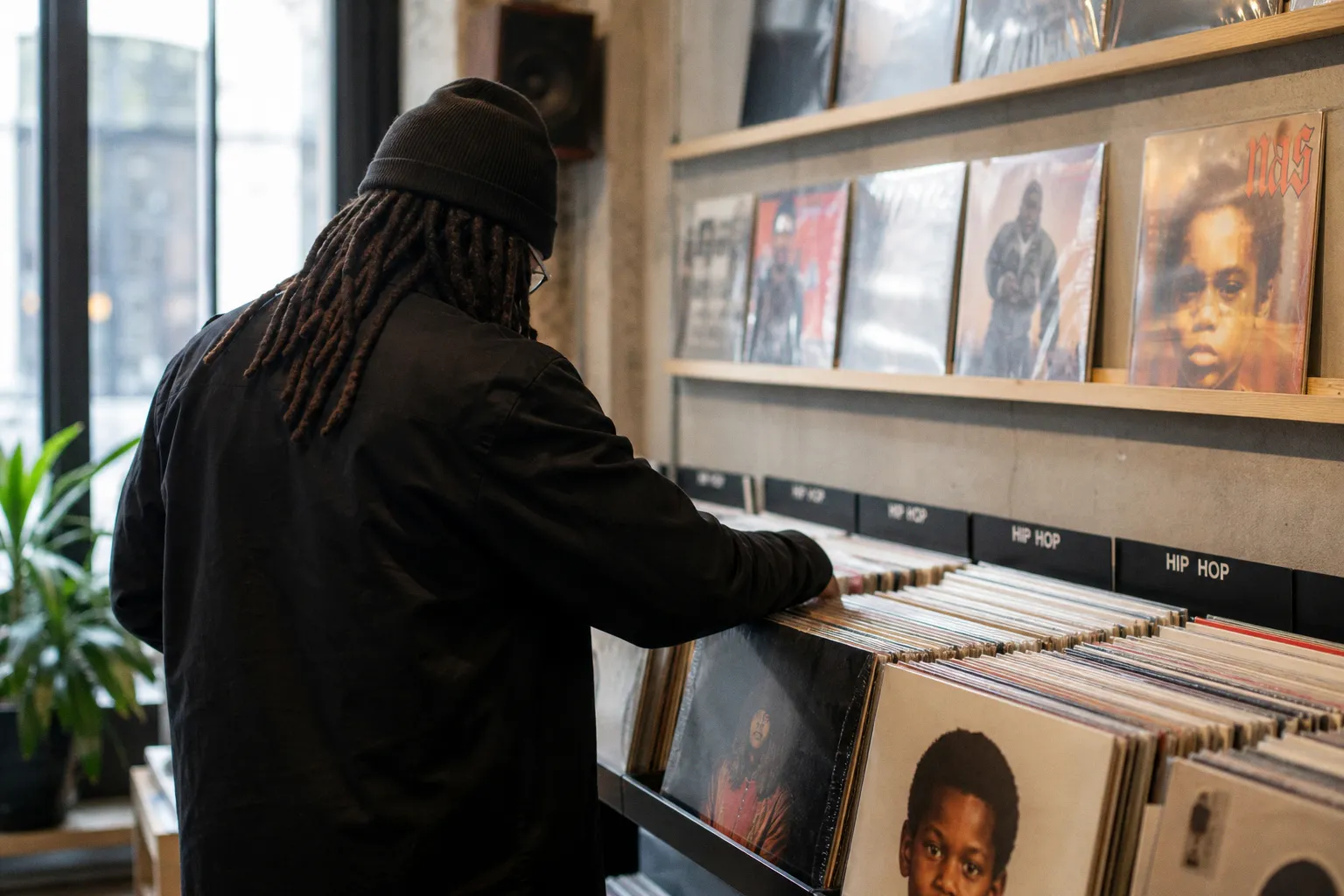
That is the plain reason I care about how to check why I check sample clearances before buying digital albums, especially in hip-hop. Not because I’m trying to play lawyer in the comment section. Not because I want rap to become less dusty, less reckless, less chopped-up and soulful. I check because digital ownership is already fragile, and sample clearance is one of the fastest ways for a great rap record to become a missing file.
Hip-hop was built on taking fragments of the world and bending them into new weather. Breaks, horns, gospel moans, Japanese jazz loops, forgotten soul 45s, YouTube rips, VHS dialogue, field recordings, drum hits with fingerprints still on them. That’s the art. But the business has never loved the art unless the paperwork is clean.
And in 2026, the paperwork matters more than the poster, the rollout, the “available everywhere” caption, or the artist’s Instagram confidence.
Digital rap collections are not as permanent as they look
The first lie of the streaming era is convenience dressed up as ownership. You click “add,” the album sits in your library, and your brain starts treating it like a crate. But a streaming library is not a crate. It is a set of permissions. A hallway of doors someone else can lock.
Even when you buy a digital album through a platform, you are not buying the underlying copyrights. You are not buying the master. You are not buying the composition. You are buying access under terms controlled by platforms, distributors, labels, and rights holders. If the distributor pulls the release because a rights claim hits, your cloud-based library may not save you. That deluxe version you thought you had tucked away can become a blank space with a title attached.
This hits rap harder because rap has always had a more complicated relationship with recorded history than most genres. Producers do not just borrow sounds; they argue with them. They turn a four-second guitar lick into a neighborhood anthem. They take a vocal sigh from 1973 and make it sound like grief from last week. That is cultural cachet. That is also a licensing minefield.
A new rap album release can look stable because it landed on the major DSPs. Don’t be fooled. Availability is not proof of clearance. An album being live on Apple Music or Spotify means it passed through distribution. It does not automatically mean every sample is clean, every split is settled, every master owner signed off, or every publisher has blessed the composition.
That gap between “uploaded” and “cleared” is where digital collections get robbed.
The stream is not the artifact. It is a temporary handshake between people who may start suing each other tomorrow.
For collectors, this changes the way I evaluate a digital purchase. I am not only listening for bars, sequencing, mix quality, and production identity. I am listening for legal volatility. If the record is sample-heavy, indie-distributed, built around obvious loops, or wrapped in that “we dropped this before anyone could stop us” energy, I slow down. The music may be great. The access may not last.
Master Use and Composition: the two pillars that keep a sample from collapsing
Sample clearance is not one permission. That’s where a lot of fans, and too many young artists, get cooked. A commercial rap release usually needs two different legal clearances when it samples an existing recording: a Master Use License and a Composition License.
The Master Use License covers the actual sound recording. The specific record. The exact performance captured on tape, vinyl, file, whatever format the original master lives in. If a producer samples a drum break from an old funk record, that master has an owner. Could be a label. Could be a catalog company. Could be a rights group that bought up masters like real estate.
The Composition License covers the underlying song: melody, lyrics, musical composition, publishing. That is a separate right. The recording and the written song are not the same asset, even if fans experience them as one piece of music.
Here’s the cleanest way to look at it:
| Clearance piece | What it covers | Who may control it | Why it matters for rap albums |
|---|---|---|---|
| Master Use License | The actual recorded audio being sampled | Record label, catalog owner, master rights holder | Without it, the sampled recording itself can trigger claims or takedowns |
| Composition License | The underlying song or musical work | Publisher, songwriter, estate, rights administrator | Without it, the melody or songwriting element can still create liability |
| 100% master rights | Full permission from all master-side rights holders | Sometimes multiple parties | Partial clearance can still leave a release exposed |
| Platform delivery | Uploading through a distributor to DSPs | Distributor, label, artist team | Delivery does not equal legal clearance |
That split is why a sample can be “cleared” in conversation and still be dangerous in reality. Maybe the artist got a verbal nod from somebody connected to the record. Maybe the producer bought a sample pack and assumed everything inside was safe. Maybe one publisher approved but another rights holder did not. Maybe the master was cleared but the composition was ignored. That is not clean. That is a loose shoelace on a moving train.
And once money starts moving, the temperature changes. A track sitting at 20,000 streams might not attract much attention. A track that catches fire on TikTok, lands in playlists, gets a video premiere, starts moving vinyl, and becomes the breakout single? Now everyone hears the sample. Now the catalog owner’s phone rings. Now the estate lawyer who did not care last month suddenly cares deeply.
This is why I don’t treat obscurity as protection. The underground loves to believe it can operate under radar forever. Sometimes it can. Often it cannot. The internet is a surveillance machine with a bassline.
How I check before I buy: not perfect, but better than blind faith
There is no public, complete, real-time database that tells you every sample on every independent rap release and whether each one is cleared. Anyone pretending otherwise is selling you smoke. You cannot verify everything from the outside. But you can read the signals.
When I’m deciding whether to buy a digital rap album, especially one built on sample-based production, I do a practical scan. Not a courtroom audit. A collector’s pressure test.
1. I read the credits like they matter, because they do.
If the platform lists producers, composers, publishers, and labels cleanly, that is a better sign than a blank metadata graveyard. I look for songwriter credits that suggest an interpolation or sample was officially acknowledged. If a track clearly flips a famous record but the credits show only the rapper and in-house producer, my eyebrow goes up.
2. I check whether the release came through a serious label or a vapor-thin distributor account.
Major labels are not saints. Let’s not insult each other. But they usually have clearance departments and lawyers whose job is to prevent obvious disasters. A one-night Bandcamp-to-DSP blast from an artist with no label infrastructure may still be brilliant, but the risk profile is different.
3. I listen for recognizable samples and ask how expensive they sound.
A tiny texture from an obscure library record is one thing. A loop from a beloved soul classic, a blockbuster soundtrack, or a globally known pop hook is another. The more recognizable the source, the more likely somebody with leverage owns it.
4. I look at whether tracks changed after release.
If early listeners mention a different beat, a missing outro, a swapped hook, or a re-uploaded version, that’s smoke. Sometimes it’s mixing. Sometimes it’s clearance. Either way, I want to know before I pay.
5. I watch the rollout language.
Phrases like “had to get this out,” “they tried to stop us,” “if it disappears, you know why,” can be marketing theater. They can also be a confession in a fitted cap. Rap loves outlaw mythology, but your library does not benefit from somebody else’s clout-chasing.
6. I compare DSPs and purchase options.
If the album is on one platform but missing from others, or if certain songs are unavailable in some regions, that can point to rights friction. Not always. But it belongs in the evaluation.
7. I save local files when the platform allows it.
This is less about clearance and more about survival. If I buy a download from a place that lets me actually store the file, I do it. Streaming access is soft. Local files are not invincible, but they are less dependent on tomorrow’s rights dispute.
This is also where broader internet trend noise can be useful. Viral chatter is messy, but if a track is suddenly being clipped everywhere, remixed, memed, or argued over, that visibility can bring rights holders out of the shadows; I keep one eye on general trend streams like viral news and social media trends for that reason, even when the music conversation starts outside rap media.
The method is imperfect. Of course it is. I’m not calling publishers on a Tuesday to ask about a drum loop from 1978. But I do not need perfect information to make a smarter decision. I need enough signal to know whether I’m buying an album or renting a disappearance.
Content ID turned the crate into a checkpoint
The old fantasy was that an uncleared sample could hide in the groove. Press the record, sell it hand to hand, maybe the original rights holder never hears it. That era is not fully dead, but it is limping.
Major digital platforms use automated content identification systems — the family of tools people casually lump together with names like Content ID — to detect copyrighted audio. These systems can flag songs, block monetization, route revenue, or trigger takedowns. They are not perfect. They miss things. They overreach. They confuse legitimate uses. But they have changed the game.
For sample-based rap, that means the machine may hear what the human clearance process ignored.
A producer can pitch-shift a loop. Chop it. Filter it through dust and static. Layer drums over it. Still, if the fingerprint is strong enough, the system may catch it. And even when automated detection does not end the track immediately, it can start the paper trail. Claim filed. Distributor notified. Artist team scrambling. Song greyed out.
This is where rap’s current release economy becomes dangerous. The pressure to drop fast is relentless. Artists tease snippets on social media, fans demand the file, managers chase momentum, and producers are expected to turn magic around before the trend cycle expires. The algorithm rewards speed. Clearance rewards patience. Those two incentives hate each other.
A clean clearance can take time, money, negotiation, and humility. An upload can take an afternoon.
That mismatch explains a lot of modern rap chaos. The music video premiere hits YouTube. The single starts moving. Reaction channels feed it. TikTok grabs the catchiest two bars. Then the claim hits. Suddenly the track is muted, demonetized, replaced, or pulled. The fan experiences it as platform weirdness. The artist frames it as sabotage. Sometimes it is just unfinished business arriving with an invoice.
In the streaming era, the sample does not have to be famous to be dangerous. It only has to be identifiable.
This is why I’m suspicious of albums that treat clearance like a post-release errand. Clearances are not garnish. They are load-bearing walls. If they collapse, the whole digital version can come down.
The Fair Use myth keeps getting rappers and fans embarrassed
Let’s kill one persistent piece of barbershop law: Fair Use is not a magic shield for commercial hip-hop sampling.
Yes, Fair Use exists. Yes, courts consider factors like transformation, purpose, amount used, and market effect. No, that does not mean a producer can loop four bars from somebody else’s record, put drums on it, sell it commercially, and expect the doctrine to ride in like a superhero.
In most commercial rap sampling scenarios, relying on Fair Use is a terrible strategy. It is not impossible in every imaginable legal context, but as practical protection for a rap release? That is close to 0% comfort. The landmark 1991 Grand Upright Music case helped set the modern fear around uncleared sampling, and the industry learned the lesson the hard way: clear it, replay it, remove it, or risk the fallout.
Fans sometimes hear “transformative” and think that ends the conversation. Hip-hop is transformative by nature, so the logic feels emotionally correct. A producer can take a sweet soul loop and make it sinister. A rapper can turn a dusty jazz phrase into street testimony. Artistically, that is transformation. Legally, transformation does not automatically erase the need for licensing.
That distinction matters.
The culture can be right and the court can still be expensive. The beat can be genius and the release can still be vulnerable. The sample can be chopped beyond casual recognition and still be owned by somebody who wants payment.
This is where my respect for the art and my cynicism about the business live in the same room. I do not want sterile rap. I do not want every producer trapped in royalty-free purgatory, scrolling through the same plastic guitar loops and hi-hat packs. Sample-based production is one of hip-hop’s central languages. But pretending the legal structure does not exist is not rebellion. It is bad planning.
And the fans pay for that planning when albums vanish.
What the warning signs look like on actual releases
No two albums carry the same risk. A major-label studio album with expensive features, clean credits, and a long rollout is not automatically safe, but it is usually built with more legal scaffolding. A surprise mixtape full of soul chops from an indie rapper with no listed publishers might be more combustible. A producer album packed with obscure loops could be either meticulously cleared or one complaint away from deletion.
I tend to group digital rap purchases into three rough risk lanes:
| Release type | Clearance risk | What I look for before buying |
|---|---|---|
| Major-label studio album | Lower, not zero | Full credits, stable tracklist, no sudden edits after release |
| Independent album with sample-heavy production | Medium to high | Producer notes, composer credits, platform consistency, download option |
| Surprise mixtape or loosie compilation | High | Local file availability, history of takedowns, obvious famous samples |
| Reissued classic mixtape | Very high if unchanged | Missing tracks, altered beats, replayed samples, new credits |
| Producer-led beat tape | Variable | Source transparency, label/distributor quality, whether samples are licensed or original |
Reissued mixtapes deserve special attention. A lot of classic blog-era and DatPiff-era material was made under different assumptions. Beats were borrowed, industry instrumentals were rapped over, samples were left wild, and nobody expected the project to become a formal digital asset fifteen years later. When these tapes finally hit streaming, they often arrive changed. Missing songs. Recreated beats. Hooks removed. Samples replayed stiffly by session musicians trying to imitate lightning.
Sometimes that is the only way to make the music legally available. I get it. But as a listener, I want to know whether I’m buying the artifact or the museum-safe replica.
The same goes for deluxe editions that appear after a song blows up. If a rapper adds bonus tracks, swaps mixes, or suddenly renames songs, I watch closely. Changes can be artistic. They can also be legal triage.
Why buying the download still matters, but doesn’t solve everything
Some readers will say: just buy downloads, stop relying on streaming. I agree halfway. If a platform gives me an actual downloadable file, I prefer that over pure cloud access. Local storage gives the collector more control. It also honors the old relationship between fan and record: you paid, you possess a copy, you can still play it when the platform changes its mind.
But digital downloads are not a force field. If you buy through a locked ecosystem and the file lives mainly in a cloud library, you can still be exposed to removals. If the retailer pulls the album before you download it, good luck. If your only copy is tied to account access, device authorization, or platform rules, that “purchase” is softer than it looks.
The better move is layered:
- Buy from platforms that provide real downloadable files when possible.
WAV, FLAC, ALAC, high-quality MP3 — whatever fits your setup. The key is that the file sits in your storage, not only in someone else’s permission structure.
- Back up your library.
One drive is a wish. Two drives is a plan. Cloud backup can help, but don’t let the cloud be your only crate.
- Keep metadata and receipts.
It sounds boring until you need to prove what version you bought, when you bought it, and which tracklist was live at the time.
- Pay attention to version changes.
If an album gets re-uploaded, compare runtimes and mixes. A 3:42 track becoming 3:18 is not always random.
- Support physical when it makes sense.
Vinyl, CD, cassette — none are perfect, all can be limited, and physical runs can also be affected by clearance issues. But once you have the object, the platform cannot grey it out.
This is not prepper behavior. This is collector behavior adjusted for a market that keeps pretending access is the same thing as ownership.
The artist side: clearance is not selling out, it is protecting the work
There’s a childish strain in rap discourse that treats clearance as corporate obedience. As if the realest move is to drop first and deal with the lawyers later. That attitude can sound romantic when the stakes are low. It sounds less romantic when the best song on the album disappears right as the artist’s trajectory starts bending upward.
Clearance protects fans, but it also protects artists. A cleared sample means the record can travel. It can be licensed. It can sit in playlists without constant anxiety. It can be pressed, synced, performed, monetized, archived. It can survive beyond the first weekend.
That matters in a music economy where catalog is power. The first-week number is loud, but long-term availability is where cultural memory gets built. A song that vanishes every six months because the paperwork is a mess cannot become a stable part of the canon. It becomes a rumor. A YouTube reupload. A Reddit thread. A file passed around with “OG version” in the title.
Rap already has too many classics trapped in rights purgatory. Whole eras of mixtape history exist in fractured form because nobody cleared what needed clearing when the music was made. Again, I understand why. Budgets were thin. The pace was wild. The law was hostile to the art. But understanding the history does not mean repeating the mistake forever.
Producers deserve to sample. Original artists deserve to be paid or at least asked. Fans deserve records that do not evaporate. None of those statements cancel the others.
My final rule: if the sample sounds too central to ignore, I don’t ignore it
I still buy sample-heavy rap albums. Gladly. Some of the best records in the culture are built from borrowed ghosts. I am not here to sanitize hip-hop into corporate playlist wallpaper. But I refuse to pretend the digital marketplace is built for permanence. It is built for control, speed, licensing, and leverage.
So before I buy, I check. I read credits. I listen closely. I watch for missing metadata, suspicious edits, platform gaps, and rollout bravado that sounds like legal negligence wearing sunglasses. I do not need every answer. I need enough to know whether the album has legs.
Because the hidden risk of digital rap collections is not just that a song might disappear. It is that the culture keeps mistaking visibility for security. A track being live today does not mean it will be there next month. A viral moment does not mean the paperwork is clean. A purchase button does not mean you own the rights or even permanent access.
Sample clearance is not the sexiest part of rap criticism. It will never trend like a diss record or a surprise feature. But it is one of the quiet forces deciding which albums stay in the room and which ones become ghosts.
And if I’m spending money on a digital rap album, I want music with more than heat. I want music with a fighting chance to remain.