Freestyle rap battles are ruining modern rap beefs
The freestyle rap battle used to be the pressure test. No edit button. No rollout calendar. No label meeting.
Darius Rollins, Chief Hip-Hop Critic & Culture Editor·Updated: July 14, 2026·16 min read
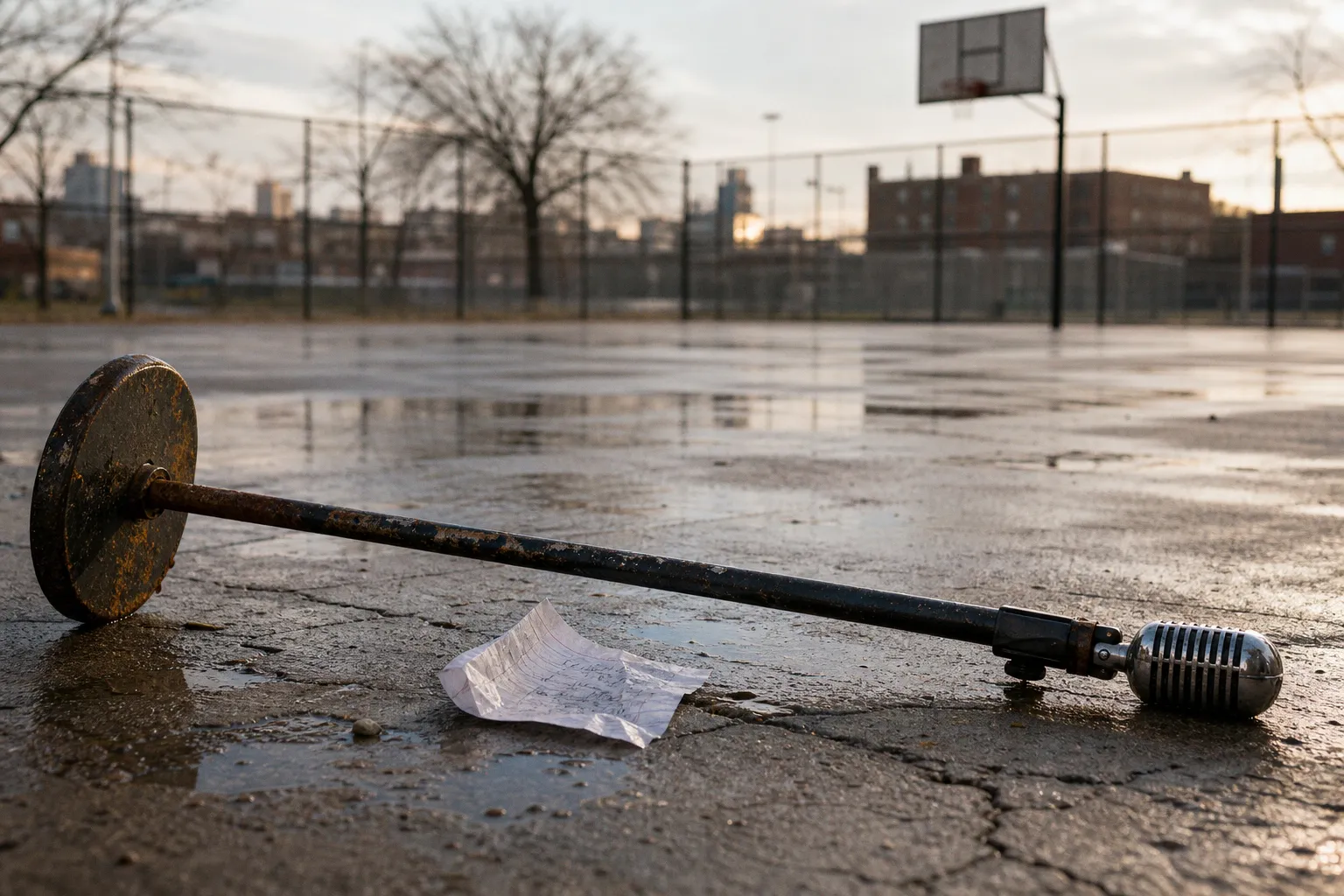
Now beef moves like product. A subliminal lands on Instagram. A podcast clip gets chopped into six angles. A diss track hits DSPs with cover art, a mix, a rollout, and a fanbase already armed with memes before the first bar finishes loading. That shift didn’t just change how rap beef travels. It changed what beef rewards. And if we’re being honest, the old freestyle battle code is not saving modern rap drama. In a lot of cases, it’s making the conversation dumber.
Not because freestyle is dead. It isn’t. URL, King of the Dot, local rooms, parking-lot cyphers, radio freestyles — the art still breathes. But the mythology around the freestyle rap battle has become a lazy measuring stick for beefs that no longer operate by those rules. Fans keep demanding spontaneous combat from artists who are fighting in an ecosystem built for screenshots, streams, legal exposure, AI fakery, and 24-hour response cycles. That mismatch is where the culture starts lying to itself.
From the cypher to the studio: beef got cleaner, colder, and more profitable
In the 1980s and 1990s, live radio freestyles and stage battles were central to how MCs tested one another. You had to be sharp enough to survive without the studio acting as your bodyguard. The crowd could hear the stumble. The room could smell fear. A weak punchline didn’t disappear into a deluxe edition. It hung there.
That era built a certain kind of rap morality: if you could not defend your name on the spot, you did not fully own your name. The freestyle rap battle was not just sport. It was credentialing. A public audit of the pen, the voice, the timing, the nerve.
But recorded diss tracks changed the math. Once the studio became the main battleground, beef became more cinematic. Artists could refine attacks, sequence reveals, stack ad-libs, test hooks, sharpen the venom. The best diss records are not weaker because they are written. Let’s kill that cheap take right away. Some of the most devastating moments in rap conflict came from writing — from structure, patience, arrangement, and a cold understanding of where to place the blade.
The problem is not written vs freestyle rap battle as a simple purity test. The problem is that modern beef absorbed the spectacle of battle culture while abandoning its accountability. Everybody wants the aura of “standing on business,” but very few want the room, the clock, the opponent, the crowd, and the risk.
A studio diss can be surgical. A live freestyle can be sloppy. A written diss can expose truth. A freestyle can expose skill. These are different weapons. The culture gets corny when we pretend one automatically outranks the other.
| Battle format | What it rewards | What it hides | Where it can go wrong |
|---|---|---|---|
| Live freestyle battle | Reflexes, crowd control, punchline timing, vocal command | Long-game strategy, layered writing, production choices | Can become a circus of crowd reaction over substance |
| Studio diss track | Structure, research, quotables, replay value, sonic impact | Immediate pressure, real-time adaptability | Can become content marketing dressed as conflict |
| Social media call-out | Speed, visibility, fan mobilization | Actual rapping, facts, craft | Often rewards clout-chasing over skill |
| Battle league format | Preparation, performance, angles, crowd room IQ | Mainstream songcraft, chart impact | Can overvalue theatrics and undercut musicality |
That table is the whole argument in miniature. The old freestyle battle ethic was built for proving skill in front of witnesses. Modern rap beef is built for extending attention across platforms. One is a furnace. The other is a machine.
The viral trap: meme-ability is beating pen game too often
Modern rap beef drama runs on the 24-hour cycle. A diss drops at midnight, and by breakfast the internet has already chosen the funniest line, the weakest outfit, the suspicious Instagram like, the alleged ghostwriter, the ex-girlfriend angle, the producer tag, the reaction streamer thumbnail, and the “who won?” poll.
That speed is not neutral. It changes the art.
The bar that wins now is often the bar that screenshots best. The line that becomes a caption. The phrase that can sit under a TikTok dance, a basketball highlight, a podcast rant, or a fan edit with fire emojis. Rap has always had quotables, obviously. But there is a difference between a line becoming legendary because it cut deep and a line being engineered to become a meme before it has even landed as music.
This is where the freestyle rap battle mythology does damage. Fans still talk like they want raw skill, but the algorithm rewards instant legibility. A complicated multi-syllabic scheme with internal flips, double meaning, and historical reference may thrill the heads. A dumb, sticky insult will travel further by lunch.
The algorithm does not care who had the better pen. It cares who gave the mob the easiest weapon.
That is not me romanticizing some imaginary golden age. Old battle rooms had their own cheap tricks. Crowd gas. Recycled bars. Personal attacks with no architecture. The difference is scale. A weak angle used to die in the room if the room rejected it. Now a weak angle can get 30 million impressions if it is packaged cleanly enough.
Diss tracks during public feuds can spike streams dramatically — sometimes by hundreds of percent at the peak of the drama. That incentive matters. Once beef becomes a streaming event, every participant has a reason to keep the pot warm. Artists, labels, media pages, reactors, playlist editors, fan accounts — everybody eats from the conflict economy.
And when everybody eats, nobody wants resolution too quickly.
That is why the modern diss often sounds less like a final blow and more like episode three of a limited series. Leave a thread open. Hint at receipts. Tease the next record. Let the fanbase speculate. Let the other side respond. Feed the channels. Feed the clips. Feed the numbers.
A freestyle battle, at its best, is built toward judgment. Modern beef, at its most cynical, is built toward continuation.
Social media did not replace the battle — it replaced the room
Instagram and X did not invent rap beef, but they changed the arena. Sub-tweeting, story posts, comment-section drive-bys, public unfollows, manager statements, podcast bait — these are now part of the combat language. Sometimes they precede the music. Sometimes they replace it entirely.
That last part is the rot.
A rapper can now create the atmosphere of a beef without actually entering one. Post a vague line. Let fans decode it. Like a shady comment. Delete a story. Let blogs repost the deletion. Then appear on a podcast and say, “If the shoe fits.” That is not warfare. That is fog machine behavior.
And yet it works, because social platforms flatten all forms of conflict into content. A direct diss, a legal threat, a fan theory, a leaked DM, a fake AI track, a real snippet, a manager denying involvement — all of it arrives in the same feed, with the same urgency, wearing the same clothes.
This is why the old question — “are rap battles real beef?” — has become harder to answer. In battle rap leagues, the answer is often no, not in the street sense. It is competition, theater, sport, craft. Two people may say horrific things under agreed terms, then dap up later. In mainstream rap beef, the answer is messier. Some conflicts are deeply personal. Some are business. Some begin as ego and become business once the numbers arrive. Some begin as marketing and get personal because artists are human and humiliation has a way of becoming real.
The freestyle battle used to help clarify stakes. You either stepped in or you didn’t. Today, stepping in can mean a dozen things:
1. Dropping a fully produced diss record with a hook designed for replay.
2. Going live on Instagram and talking reckless for 17 minutes.
3. Sending subliminals through a feature verse.
4. Letting affiliates, podcasters, or streamers carry the mud.
5. Posting “receipts” that may or may not prove anything.
6. Waiting for streaming data before deciding whether to escalate.
7. Saying nothing because silence can now be framed as strategy.
That last one matters. Silence used to look like fear. Now silence can look like brand management. If your opponent’s diss is doing numbers, responding too fast may boost them. If their angle is weak, ignoring it may starve the story. If legal risk is involved, the best bar might be no bar at all. Ugly truth, but truth.
This is why demanding an immediate freestyle response from every artist is outdated. It sounds tough, but it ignores the machinery around modern celebrity rap. A superstar is not just an MC with a notebook. He is a catalog, a touring company, a sponsorship portfolio, a security concern, a legal department, and a fanbase with nuclear access to social media.
That does not excuse cowardice. It explains the battlefield.
Drake vs. Kendrick showed the peak — and the problem
The 2024 Drake vs. Kendrick Lamar feud proved two things at once: high-level lyricism still matters, and modern beef is no longer governed by live confrontation.
That battle had writing. It had strategy. It had character assassination. It had fanbase warfare. It had streaming dominance. It had public discourse moving faster than any traditional battle room could contain. It also had the fog of the digital era: AI-generated tracks muddying the waters, reaction economies framing the conflict in real time, and every release being judged not only as a diss but as a data event.
This was not two MCs in a room. This was a cultural infrastructure test.
And that is why it became so massive. The records mattered, but the ecosystem magnified them. Streaming platforms made every play visible. Social media turned every bar into a court filing. Fans became unpaid campaign staff. Media became scorekeepers. Reaction streamers became the front row. The comments became the crowd.
But notice what disappeared: the fantasy of a clean freestyle rap battle settling everything. Nobody serious expected Drake and Kendrick to stand on a stage and trade improvised rounds until a room picked a winner. That would have been fascinating, sure. It also would have been absurd for the scale of the conflict. Too much money, too much brand weight, too many moving parts, too much global attention.
So the culture did what it does now. It judged the beef through a hybrid lens: bars, songs, memes, numbers, timing, perceived truth, replay value, humiliation factor, and cultural alignment.
That last phrase — cultural alignment — is the quiet killer. A diss does not just need to be sharp anymore. It needs to confirm what people already suspect or want to believe. The most damaging diss in 2024 was not necessarily the most technically dense one. It was the one that locked into a public perception and made that perception feel permanent.
That is battle rap logic and social media logic colliding. In a live room, an angle works if the crowd believes it for that moment. Online, an angle works if the crowd can carry it for weeks.
Freestyle battle culture is not the villain — the nostalgia around it is
Let me be precise, because people love misquoting a clean argument into a dirty one. Freestyle battle rap beefs are not ruining hip-hop. Freestyle culture remains one of the purest laboratories for MC skill. The issue is the way fans and commentators weaponize freestyle nostalgia against every modern conflict, as if spontaneity is the only honest form of rap combat.
That is a narrow reading of the art.
Writing has always been central to rap greatness. The best MCs are architects. They build tension, conceal blades, set traps, bring hooks back with new meaning, use cadence as misdirection. A diss track gives an artist room to do that. It lets them research. It lets them compose. It lets them make a record that survives beyond the beef cycle.
A freestyle battle gives us something else: proof of command under pressure. It strips away the studio and asks, “Can you still move the room?” That matters. It should always matter. But it is not the only standard.
The real damage comes when old battle expectations are pasted onto new beef conditions without context. We end up praising the wrong things. We call speed “courage” even when the response is trash. We call silence “fear” even when it is tactical. We call a clever meme “a body bag” because it made us laugh for eight seconds. We call any written record “calculated” like calculation is not part of elite rap.
The culture does not need less writing. It needs less pretending that every viral insult is warfare.
There is also a class divide inside the conversation. Battle rap, as a subculture, asks its audience to listen closely. You catch schemes, callbacks, flips, room shakers, rebuttals. Mainstream beef asks a broader audience to react quickly. Those are different listening habits. When the mainstream borrows battle language — “rounds,” “body,” “rebuttal,” “angle” — it often leaves behind the discipline that made those terms mean something.
That is how we get fans who cannot break down a rhyme scheme calling every diss “mid” unless it comes with a scandal attached. That is not battle culture. That is gossip wearing a fitted cap.
The business of beef wants no final round
Traditional battles tend to crave a winner. Modern rap beef often benefits from ambiguity. If there is no clean ending, the content continues. If both sides can claim victory, both fanbases stay active. If the score is permanently disputed, the beef becomes renewable energy.
That is why the industry has quietly learned to love unresolved tension. A little friction boosts catalog streams. A hot diss can revive a rollout. A public call-out can make an album feel urgent. A feud can reposition an artist’s silhouette overnight: villain, underdog, bully, truth-teller, technician, victim, boss.
This does not mean all beef is fake. That claim is lazy and usually wrong. Real resentment exists. Egos bruise. Money gets funny. Women, crews, contracts, street ties, old slights, stolen flows, manager politics — rap beef has plenty of real fuel. But modern infrastructure is very good at monetizing real emotion until it becomes indistinguishable from campaign strategy.
That is the cynical part nobody wants to sit with. The pain may be real. The rollout can still be optimized.
Look at how beef now moves:
- A vague slight creates speculation.
- Fan pages identify possible targets.
- Podcasts add “industry context.”
- Old clips resurface to build a timeline.
- The first diss drops and numbers spike.
- The response window becomes content by itself.
- Every silence becomes an angle.
- Every angle becomes a clip.
- Every clip becomes a metric.
In that system, the freestyle battle feels almost too honest. It is inefficient. It burns fast. It demands presence. It risks immediate embarrassment. It does not always produce a clean streaming asset. A brilliant freestyle can become legendary, yes, but a polished diss with a sticky hook can dominate playlists, captions, and clubs. The market knows which one it prefers.
And markets are not moral. They just move money toward attention.
What should be preserved — and what should be retired
The answer is not to force mainstream rappers back into face-to-face freestyle combat like this is a sacred temple and everybody forgot the prayer. That would be cosplay. The game changed because the platforms changed, the money changed, and the audience changed.
But the freestyle rap battle still has values worth protecting:
1. Accountability in the moment. You cannot blame a bad mix when the room hears you choke. That kind of exposure keeps MCs honest.
2. Crowd intelligence. A real battle crowd can be brutal, but it can also detect fraud quickly. You learn what lands without a marketing department translating it.
3. Rebuttal skill. The ability to flip what just happened is one of rap’s highest forms of IQ. Studio disses rarely test that.
4. Performance pressure. Breath control, timing, eye contact, command — those are not extras. They are part of MCing.
5. Respect for craft over gossip. Battle rooms, at their best, reward the bar itself, not just the scandal around it.
What needs retiring is the fake purity test. The idea that a written diss is automatically less authentic. The idea that every real beef should end in a live battle. The idea that viral humiliation equals lyrical victory. The idea that social media engagement is the same thing as cultural impact.
Rap does not need to choose between diss tracks vs freestyle battles like one must kill the other. It needs better literacy around both. A live battle should be judged by live battle standards: presence, rebuttal, crowd control, punch density, performance. A diss record should be judged by diss record standards: writing, timing, truth value, songcraft, replay, damage. A social media rant should mostly be judged as what it is: noise until the music backs it up.
The danger is not that freestyle battles are fading from mainstream beef. The danger is that their language remains while their discipline disappears. Everybody says “battle” now. Fewer people mean bars.
Final verdict: the old code cannot police the new chaos
Freestyle rap battles are “ruining” modern rap beefs only in the sense that their ghost keeps haunting a game that no longer plays by their rules. The culture keeps invoking the live battle as the ultimate standard, then turns around and rewards memes, metrics, gossip, and rollout strategy. That contradiction makes everybody sound confused.
The freestyle tradition deserves respect, not blind worship. It gave hip-hop a courtroom before the platforms built a casino. It taught MCs to defend their names with breath and nerve. But modern beef lives in a different architecture now — streaming spikes, AI confusion, social media courts, fanbase militias, and diss records engineered for replay as much as impact.
So no, freestyle is not dead. And no, written disses are not automatically fake. The real issue is simpler and uglier: modern rap beef has become too profitable to be settled cleanly, and too public to be judged purely.
If the pen game is strong, let the record stand. If the freestyle is sharp, let the room decide. But stop pretending every beef needs an old-school cypher ending when the whole industry is making money off the fact that it never really ends.