Hip hop fashion: why perfect styling is a mistake
The cleanest outfit in the room can still be the weakest. That is the problem with the over-styled rap aesthetic now flooding feeds: every layer is pressed, every color is calibrated, every accessory arrives with its receipt still spiritually attached.
Darius Rollins, Chief Hip-Hop Critic & Culture Editor·Updated: July 20, 2026·11 min read
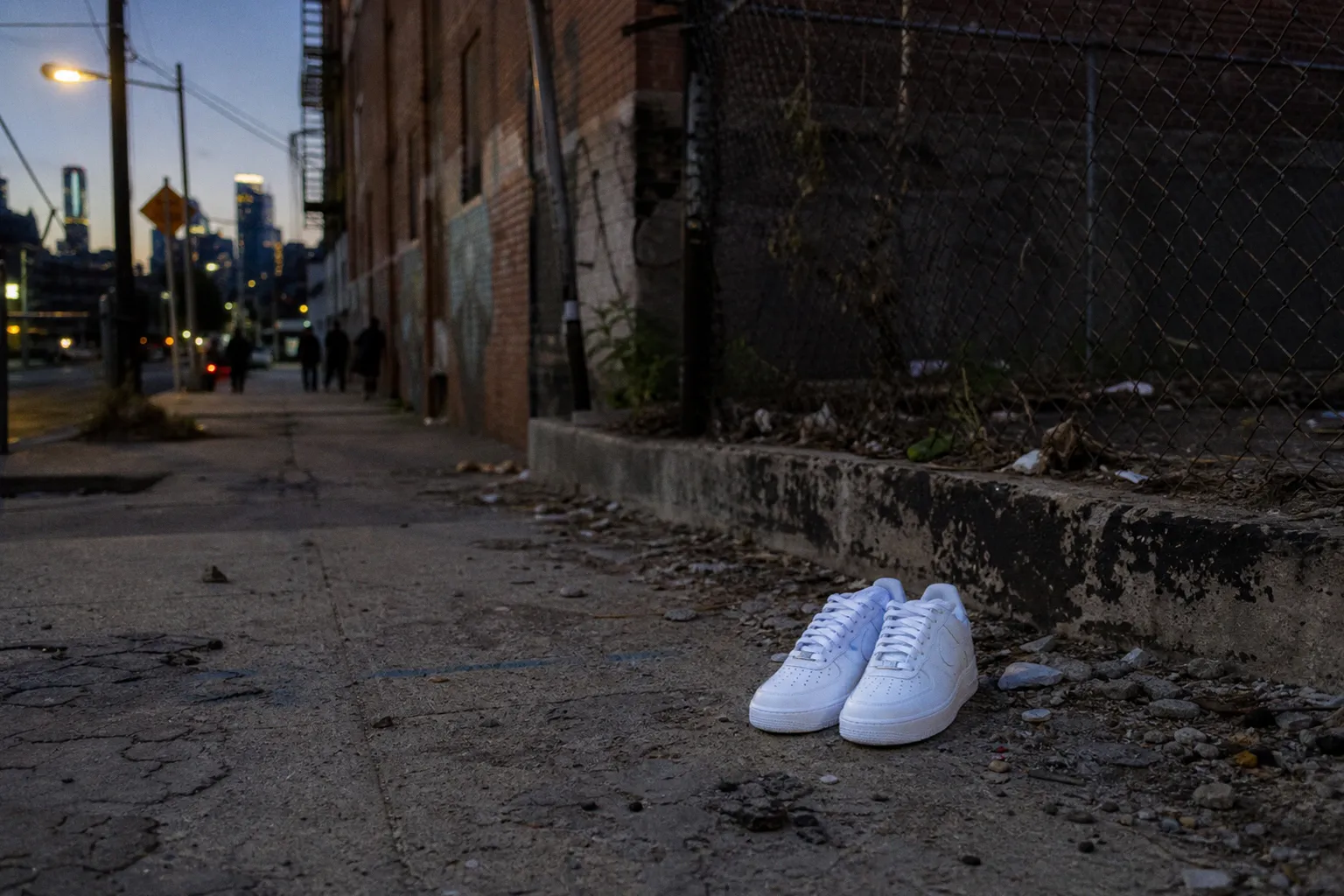
The silhouette lands like a brand deck. Expensive, yes. Memorable, rarely.
Hip hop fashion was never built to look accidental. It was built to look intentional on its own terms. That difference matters. A pristine sneaker, a heavy chain, a tailored leather jacket—none of these are the enemy. The issue begins when the outfit has no friction: no local code, no personal remix, no sign that the person wearing it needed to move through an actual day rather than pose for an eight-second reel.
The culture has always carried aspiration. It has also carried invention, customization, Black pride, glamour, activism, and pure flex. But hip hop fashion becomes a costume when aspiration is all it has left. Perfection is not the goal. Presence is.
A fit does not need to be messy. It needs to have a point that cannot be purchased off the mannequin.
The myth of the perfect silhouette
There is no universal hip hop uniform, despite what the algorithm keeps trying to sell us. The culture’s fashion vocabulary has included tracksuits, Kangols, crisp sneakers, denim, furs, gold, oversized tees, sharp tailoring, luxury pieces, colorful prints, heels, wigs, and whatever else an artist or a neighborhood made feel inevitable.
That range is the whole story. Not a bug. Not a loophole.
The current streetwear style mistake is treating “authenticity” like a preset. Take the same cropped varsity jacket, stack the same neutral cargos, lace the same hard-to-get sneaker, add the same chrome-heavy jewelry, then photograph it against the same concrete wall. Technically, every piece may have cultural cachet. Together, they can look like a streaming farm for outfit ideas: optimized, boosted, and completely drained of human signal.
A perfect silhouette often fails because it is too obedient. It follows the mood board instead of bending it. Hip hop has historically done the opposite. It takes an existing visual language and puts pressure on it until it says something new.
That is why the polished look is not automatically inauthentic. Let’s kill that lazy argument early. A sharp suit can be hip hop. Luxury can be hip hop. Minimalism can be hip hop. The question is whether the styling has been absorbed into the wearer’s identity—or whether the wearer has disappeared inside a product launch.
Here is the split.
| Parameter | Styled with intention | Over-styled rap aesthetic |
|---|---|---|
| Silhouette | Uses proportion to express attitude, movement, or local taste | Copies a currently approved fit from head to toe |
| Luxury | Mixed, reworked, or worn with a personal reason | Used as visual proof of price alone |
| Sneakers | Part of the outfit’s rhythm, sometimes the anchor | Treated as the entire personality |
| Accessories | Carry contrast, history, or a real point of view | Added until the fit looks like a retailer’s carousel |
| Imperfection | A cuff, crease, wear pattern, or odd pairing that feels lived-in | Sanitized out in pursuit of “content-ready” polish |
None of this is a formal rulebook. Hip hop has never had one. But the culture’s strongest looks tend to have authorship. You can see who made the decision.
Function wrote the original flex
The baggy silhouette did not become iconic because somebody decided “oversized” would photograph well. It had a job. It allowed movement.
April Walker’s work is a useful corrective to the way fashion history gets flattened into Pinterest captions. At her Brooklyn custom shop, customers repeatedly asked for deeper pockets, more room through the leg, a lower crotch, and straight hems that could work either inside or outside a pair of Timberland boots. Those requests helped shape Walker Wear’s first rough-and-rugged suit. The design language came from wearers. From use. From people who did not need their clothes to look theoretical—they needed them to operate.
Dancers valued the room because they could move freely. That is not some minor tailoring footnote. It is the DNA.
Hip hop style has always been functional in ways the fashion industry loves to rediscover twenty years late and rename. A tracksuit works. A cap works. Denim works. Timberlands work. Pristine sneakers carry pride, but they also move through a city differently than a fragile runway shoe. Even the oversized fit had a physical logic before it became a trend cycle.
The problem with contemporary luxury streetwear trends is not luxury. The problem is amnesia. When a label borrows the volume, the utility pockets, the oversized shoulder, or the boot-ready hem but strips away the reason those details existed, it is selling a silhouette without its pen game.
That does not mean everyone needs to dress in archival baggy denim and 40-ounce proportions. Please. Costume nostalgia is just another form of copy-paste styling. It means fit should answer a real question:
1. Can you move in it? If the outfit looks great only while standing square to a camera, the styling has already exposed its weakness.
2. Does the proportion belong to your body? Oversized is not a personality. Neither is ultra-fitted. The strongest silhouette makes the wearer look more like themselves, not like a mannequin assigned a demographic.
3. Do the details solve anything? Pockets, hems, layering, fabric weight, footwear—these are not just decorations. They tell us whether the clothes were chosen for life or for a post.
4. Is there visual tension? A clean jacket with beat-up denim. A formal trouser with a rough sneaker. A loud chain over a plain thermal. The tension gives the look rhythm.
5. Would it survive outside the frame? Streetwear that cannot handle a subway platform, a studio session, a packed venue, or a long day in the city is not really streetwear. It is wardrobe staging.
The real flex is not wearing something untouched. It is making something expensive, ordinary, old, or awkward look like it was always yours.
The remix is the receipt
Dapper Dan’s Harlem boutique opened in 1982 and closed in 1992, but its influence never got boxed into those dates. His work fused European luxury monograms with custom, street-specific design at a time when the mainstream fashion world was not offering that kind of recognition to Harlem’s clientele. The point was not simply logos. It was translation.
He understood that a luxury symbol could be re-authored. A monogram could be turned into a jacket, a tracksuit, a custom piece with a swagger the original house never imagined. That is why reducing Dapper Dan to “the guy who put luxury prints on streetwear” misses the whole move. He created a visual language for people who were already making status, identity, and self-invention visible on the street.
His Gucci partnership began in 2017, but the lesson is bigger than any one brand relationship: hip hop fashion does not wait politely for institutional approval before creating value.
Modern customization has to carry that same energy, not just imitate the surface. A hand-painted jacket can be dead on arrival if it looks like an e-commerce template. A custom sneaker can be corny if it is merely a logo collage. A distressed tee can be more manufactured than a pristine one. DIY is not automatically soulful. The execution still has to speak.
The best remixes usually do one of three things:
- They connect two worlds that were not supposed to meet. Workwear with jewelry-level precision. Luxury tailoring with a local team jacket. A formal shoe under a deliberately loose denim stack.
- They turn wear into character. Faded fabric, repaired seams, scuffed leather, altered proportions—signs of use can become part of the statement when they are real rather than factory cosplay.
- They make the wearer’s taste impossible to confuse. You should be able to remove the labels and still recognize the person’s trajectory.
And yes, technology is now part of that process. Fashion teams use digital tools to sketch variations, test materials, track resale behavior, and predict demand. Anyone curious about how model-driven systems get built can disappear into research paper breakdowns, benchmarks, and implementation notes for a while. But no model can manufacture a credible point of view. It can identify patterns; it cannot give a fit a lived-in reason to exist.
That is why algorithmic styling keeps producing competent emptiness. It knows what has performed. It does not know what has meaning.
Individuality is not a slogan
The phrase “be yourself” has been abused so badly by brand copy that it barely has a pulse. In hip hop fashion, individuality is more demanding than that. It is not random mismatch. It is not wearing something ugly and calling it brave. It is a coherent personal language built over time.
The Museum at FIT framed hip hop style around aspiration, inventiveness, remixing, customization, individualization, and boundary-pushing. That list matters because it makes room for contradiction. You can be immaculate and disruptive. You can be flashy and functional. You can be high fashion one week and stripped back the next. The culture has never asked everyone to perform the same version of realness.
But it does punish imitation eventually.
A rapper can wear every runway look before it hits retail and still look behind the curve if the fit has no personal edit. The same goes for fans chasing “authentic hip hop outfits” as if a shopping cart can provide a cultural passport. Buying the pieces is easy. Developing the eye is the work.
That eye comes from observation. Watch how people in your city actually dress when there is no camera crew. Notice how a local sneaker gets worn versus how it gets displayed. Notice who can make one jacket look like a signature for years, and who needs a new drop every Friday to maintain the illusion of relevance.
This is where the industry’s clout-chasing gets especially tired. Brands keep selling “limited” because scarcity is easier to package than taste. Artists keep launching merch lines that look like they were designed in a group chat between tour rehearsals. The graphic is loud, the blank is generic, the price is disrespectful, and the only story is that it sold out.
Selling out is not cultural proof. A bot can buy a hoodie. A real merch line needs a visual world.
The strongest artist merchandise lines understand that a tee is not just tour inventory. It can document an era, extend an album’s atmosphere, or give fans an object that feels specific to a place and a moment. The weak ones slap a face, a date, and a flaming font onto a disposable blank, then call the checkout page community.
That is not fashion. That is venue concession strategy.
Women never needed permission to break the uniform
Any discussion of rap fashion rules that treats women as a side chapter is already playing catch-up. Women have always adapted shared streetwear codes while taking them somewhere else entirely: large earrings, styled hair, pastel color, designer pieces, furs, wigs, bikinis, heels, sharp body-conscious fits, oversized layers. There was never one sanctioned uniform.
That history kills another weak argument: that “real” hip hop fashion is automatically masculine, baggy, rugged, or deliberately stripped of glamour. No. Glamour has been in the culture. So has softness. So has precision. So has overt luxury. So has the ability to turn a hyper-feminine detail into a power move rather than an accessory to somebody else’s look.
The same goes for the false divide between high fashion and streetwear. Hip hop has been crossing that border for decades, sometimes with custom pieces and sometimes by forcing elite fashion to confront the people it ignored. The industry now loves to cast rappers as runway ambassadors because the cultural math is obvious. The audience is there. The influence is there. The image moves product.
Still, proximity to a fashion house is not the same thing as style leadership. A front-row seat can be bought. A campaign can be negotiated. A signature silhouette that shifts how people dress? That requires more than a contract.
The real question is whether the artist, designer, or stylist is adding vocabulary—or just wearing the loudest thing available.
The fit needs a pulse, not a polish
Hip hop fashion should not be forced into some fake anti-perfection doctrine. There is nothing wrong with a crisp white sneaker. Nothing wrong with tailoring that lands perfectly. Nothing wrong with luxury, coordination, or a look so clean it makes the room recalibrate.
But clean is not the same as complete.
The mistake is believing that every loose end must be erased: every crease steamed out, every color matched, every logo positioned, every reference approved by the internet’s unofficial fashion police. That is how style loses its danger. And without a little danger—social, visual, personal—it loses its hip hop pulse.
The culture’s most durable fashion language was built through remixing, movement, necessity, and the refusal to wait for permission. It has room for the tailored and the rugged, the maximalist and the minimal, the jewel-heavy and the nearly plain. What it does not need is another uniform pretending to be self-expression.
Wear the rare sneaker if it means something. Wear the luxury piece if you can bend it into your own sentence. Keep the fit sharp if sharp is truly your language.
Just do not confuse a flawless outfit with a memorable one.